
By Jones Anlimah
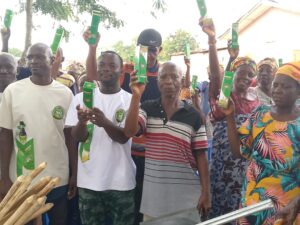
Chiefs and government officials have called for renewed investment in agriculture, education, cultural preservation and tourism as the people of Avatime celebrated the 2026 Amu Festival at Dzokpe in the Ho West District of the Volta Region.
The festival, which celebrates the traditional brown rice of the Avatime people, was held under the theme: “Celebrating and Sustaining Avatime as a Climate Resilient Community through Brown Rice Production and Consumption, Culture and Eco-Tourism.”
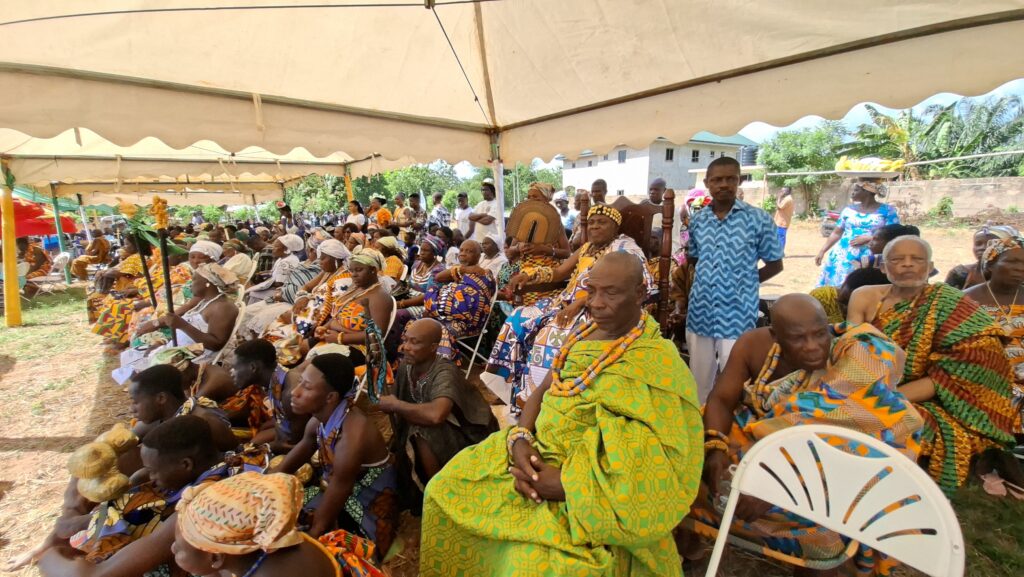
The celebration brought together traditional authorities, government representatives, development partners, members of the Avatime community and visitors to promote the area’s cultural heritage and development aspirations.
Chief of Avatime Dzokpe, Okusie Kornuglo X, said the festival had evolved beyond cultural celebrations into an important platform for addressing the development challenges confronting the traditional area, particularly the effects of climate change.
He observed that changing rainfall patterns, rising temperatures and the drying up of streams were increasingly affecting the livelihoods of communities living in the mountainous area.
“Our mountains have fed us and protected us since our ancestors migrated from the Ahanta areas to settle here. But we all feel it. The climate is changing. The rains are no longer predictable. Our streams dry faster. The weather is hotter,” he said.
He explained that the modern revival of the Amu Festival in 2010 was intended to restore interest in the cultivation of traditional brown rice while using the celebration to mobilise resources for community development.

According to him, the festival had contributed to development interventions, including the provision of potable water for Dzokpe following an appeal made when the community hosted the celebration in 2016.
He said the community was now targeting the construction of a six-unit classroom block and a three-unit teachers’ bungalow at its basic school at an estimated cost of GH¢2 million.
He appealed to individuals, institutions, corporate organisations and development partners to support the project, stressing that quality education was essential to preparing the next generation to respond to climate change and take advantage of opportunities in agriculture and eco-tourism.
“A climate-resilient community cannot be built without educated children,” he emphasised.
Traditional Council calls for investment in Avatime
The Paramount Chief and President of the Avatime Traditional Council, Osie Adza Tekpor VII., described the Amu Festival as an important instrument for strengthening the people’s common identity, preserving ancestral traditions and promoting the area’s tourism potential.
He said the celebration also provided an opportunity to mobilise resources for development projects while showcasing the natural attractions, waterfalls, mountains and cultural heritage of Avatime.
Osie Adza Tekpor urged government ministries, departments and agencies to direct greater development attention to the area, particularly in infrastructure, agriculture and tourism.
He identified brown rice as an important economic product with the potential to expand beyond traditional consumption if adequate attention was given to production, processing, packaging, marketing and access to wider markets.

“The brown rice that we celebrate today as a broad identity of our traditional festival has a penchant to become a stronger economic product through improved production, processing, packaging, marketing and access to the wider market,” he stated.
The paramount chief also called for deliberate efforts to involve young people in decision-making and community development, arguing that the future of the traditional area depended on their active participation.
“The future of our young people is today. We must build Avatime with our youth, not simply plan for them,” he said.
He further announced the inauguration of a newly constituted Avatime Development Committee to coordinate development initiatives, mobilise resources, strengthen partnerships and promote accountability.
He clarified that the committee was not intended to replace traditional authorities or existing community development structures but would complement their work.
Government announces GH¢23,000 support
The Ho West District Chief Executive, Prof. Francis Dusey, who represented the President, John Dramani Mahama, the Volta Regional Minister, James Gunu, and the Member of Parliament for the area, Emmanuel Kwasi Bedzrah, commended the traditional authorities for linking cultural identity with agricultural development and environmental sustainability.
He said brown rice production and consumption could contribute to food security, improve household nutrition and create employment opportunities along the agricultural value chain.
He encouraged farmers and agricultural entrepreneurs to explore opportunities in rice production, processing, packaging and marketing while urging residents to patronise locally produced food.
Prof. Dusey also highlighted the tourism potential of Avatime, citing its scenic landscapes, traditional heritage and natural attractions as opportunities for investment and economic growth.
On government interventions in the area, he announced that engineers from the Ministry of Roads and Highways and a contractor who previously worked on the road network linking Fume, Bajeme, Amenyope and Vane had undertaken a second assessment of the road following a presidential directive.
He also disclosed that the District Assembly was renovating the basic school at Fume.
Addressing the appeal for a six-unit classroom block and teachers’ accommodation at Dzokpe, the DCE said he and the Member of Parliament would engage the traditional authorities to explore ways of supporting the project.
He further announced a total pledge of GH¢23,000 towards the community’s development efforts.
The amount comprised GH¢10,000 pledged on behalf of the President and the Volta Regional Minister, GH¢10,000 from the Member of Parliament and GH¢3,000 from the Ho West District Assembly.
Prof. Dusey also announced that the Assembly intended to provide a new mechanised borehole for the community in 2027.
Culture and eco-tourism as development drivers
The 2026 celebration reinforced the importance of using Avatime’s cultural and natural resources to stimulate sustainable economic development.
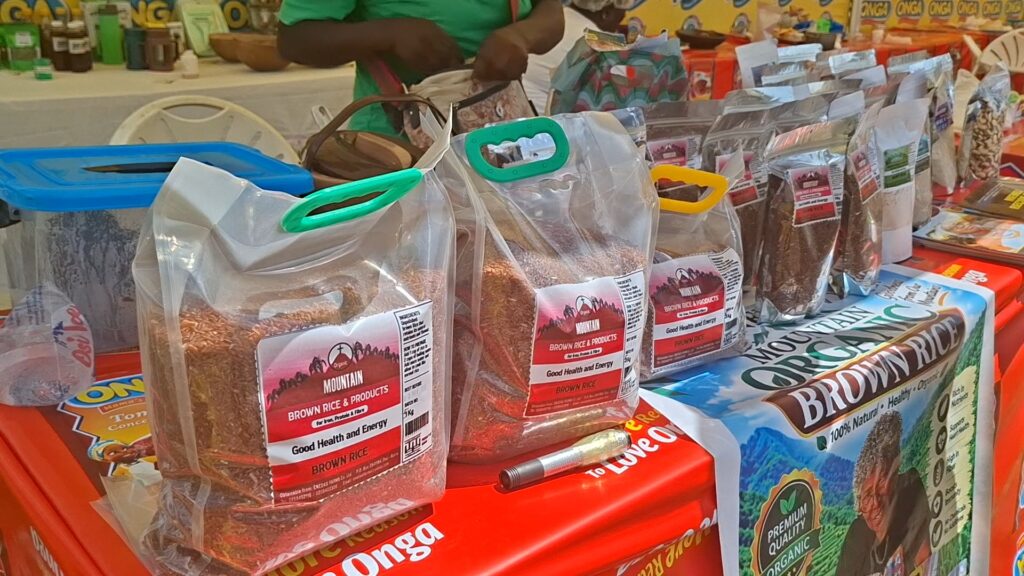
The area’s mountainous landscape, waterfalls, ancestral caves and traditional practices offer opportunities for eco-tourism, while the promotion of brown rice production and consumption provides a pathway to strengthen local agriculture and livelihoods.
The festival also served as a reminder of the need to protect the environment and preserve cultural knowledge for future generations.
With renewed calls for investment in education, agriculture, tourism and infrastructure, stakeholders expressed hope that the Amu Festival would continue to serve as a platform for mobilising collective action towards a more resilient and prosperous Avatime traditional area.