
By Jones Anlimah
At first, it was just noodles in a takeaway pack.
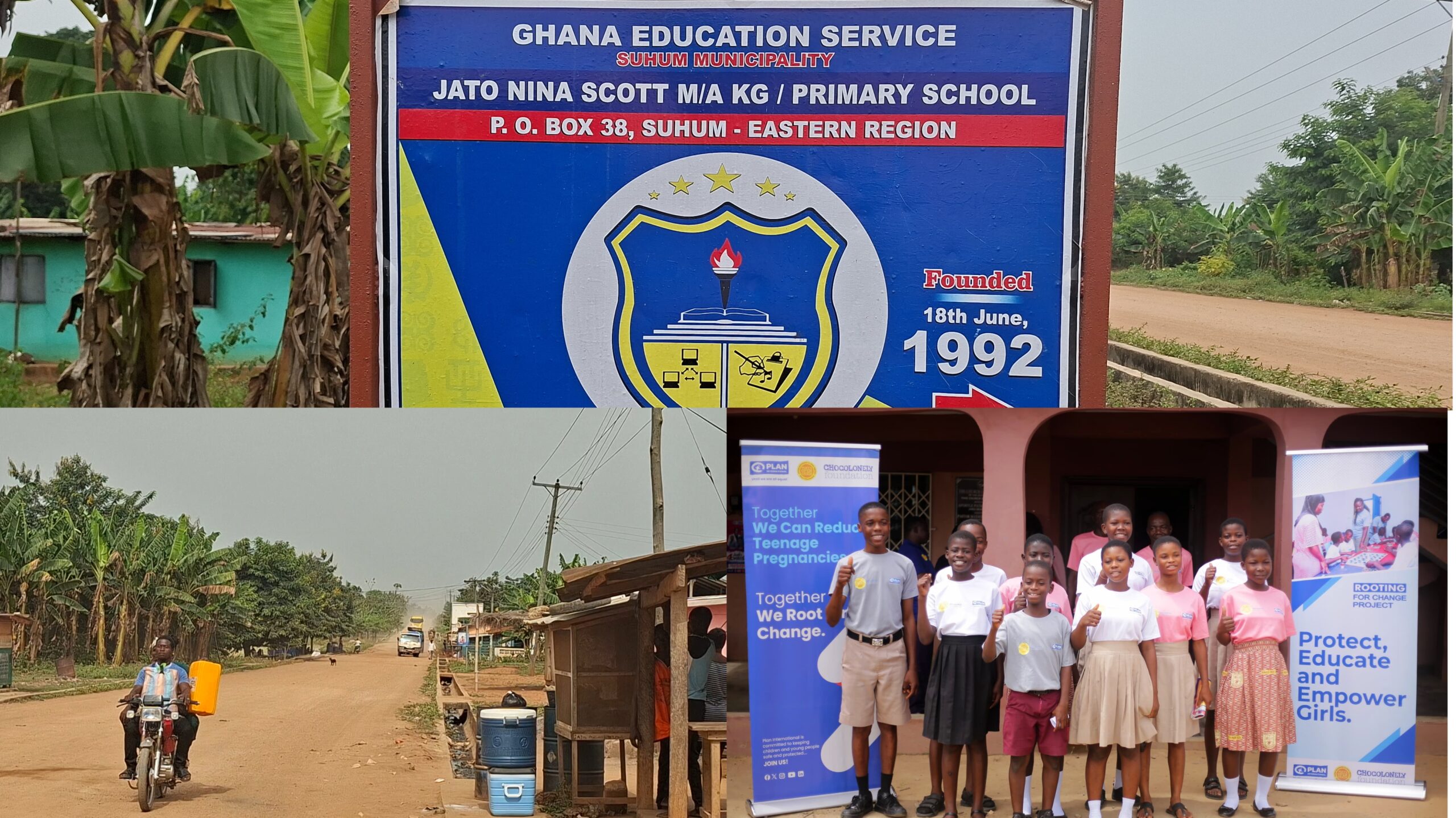
In Jato, a cocoa-growing and local gin brewing community in the Suhum Municipality of the EasternRegion, young men mostly commercial motorbike riders, would approach schoolgirls with what they called a “laptop.” It was not a computer, but a pack of Indomie or spaghetti, opened and placed on the lap.
For some girls, the offer of food in a community battling poverty became the beginning of something far more serious, unintended pregnancy.
“Almost every year during BECE, we recorded teenage pregnancy,” recalls the Chief of Jato, Nene Baffour Teitey Adjewi III. “It became a major challenge for us.”
The Basic Education Certificate Examination (BECE), meant to mark academic progress, often coincided with reports of girls dropping out of school due to pregnancy. For a community of about 1,400 people, the pattern was worrying.
But something has changed.
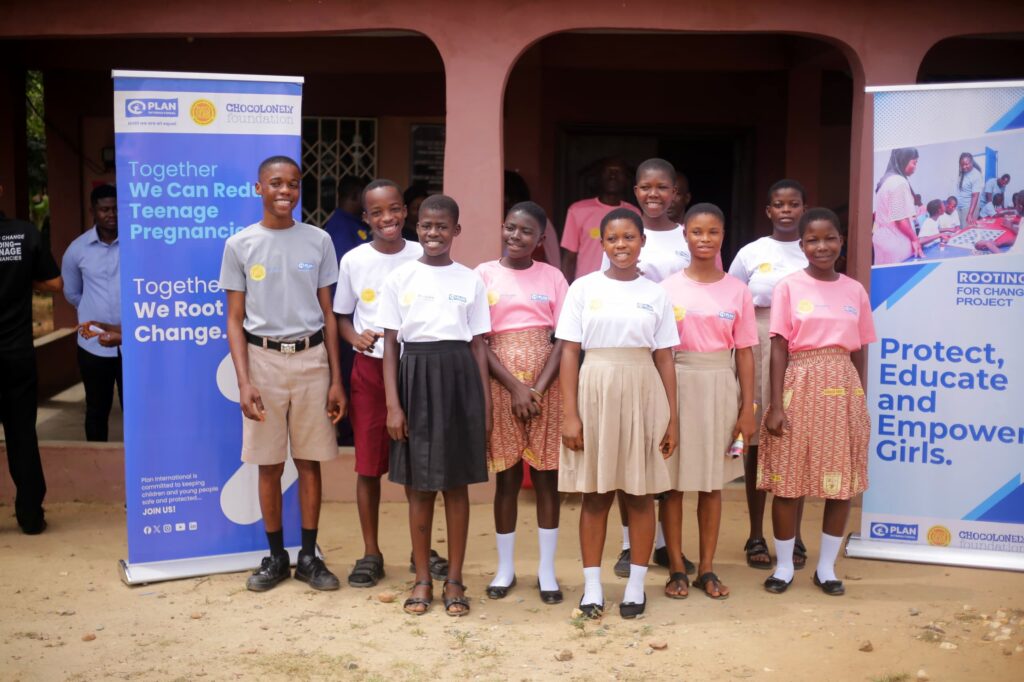
For the first time in recent memory, Jato recorded zero teenage pregnancies during the 2025 BECE.
Community members say the turning point came with the introduction of Rooting for Change, an initiative by Plan International Ghana with funding support from Tony’s Chocolonely in 2024.
When the Girls Started Saying “No”
Ivan Ayivor, a community facilitator, remembers a recent encounter that confirmed the shift.
“The okada boys were asking me,” he says with a faint smile, “what have you people told the Jato girls? Formerly, when we brought these ‘laptops,’ they would follow us. Nowadays, they don’t,” he stated.
That change did not happen overnight.
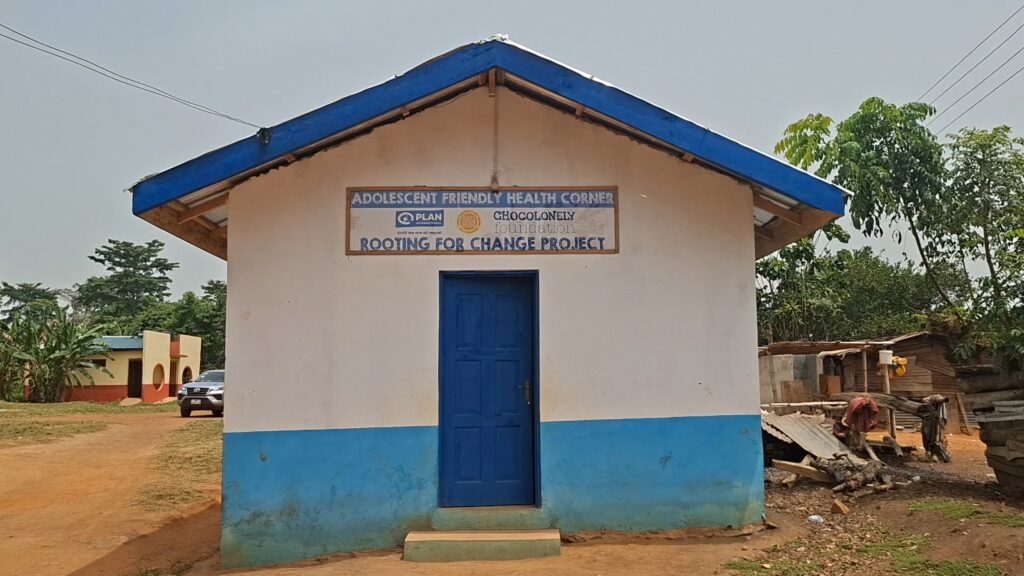
Since October 2024, Jato has been part of a pilot intervention designed to address unintended adolescent pregnancy in cocoa-growing communities by Plan International Ghana. Teachers, nurses, and health workers were trained to provide Sexual and Reproductive Health and Rights (SRHR) education. Adolescent clubs were formed in schools, and peer educators were selected and trained to guide their colleagues under the Rooting for Change project.
At Jato Nina Scott M/A Junior High School, the difference is visible.
“Before, the children were like free range,” says Michael Odonkor, the school’s chaperone. “Some could choose whether to come to school or not. Attendance was poor,” he added.
Today, he says, attendance has improved significantly. Students are more focused. Conversations about rights, responsibilities, and future aspirations are no longer taboo but the preferred of most female students now.
A New Confidence Among Girls
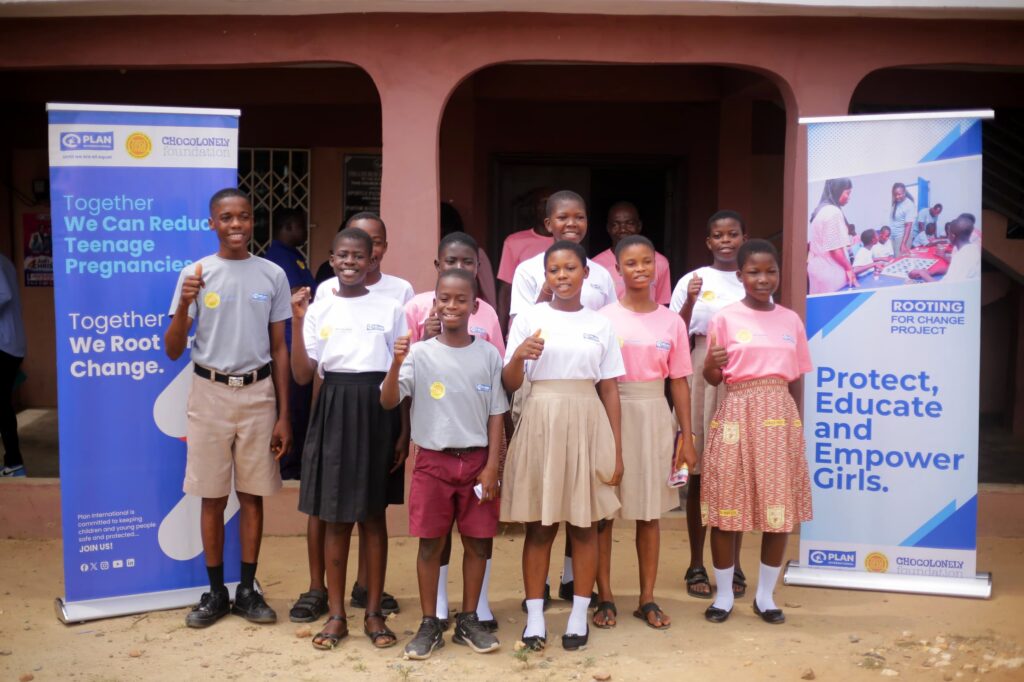
In one of the school’s adolescent clubs, girls speak more openly than they did just a previously.
“Through the club, we learned about our bodies and our rights. The issue of staying out late at night and the pregnancies associated with it has also stopped. We say thank you, and God bless Plan International Ghana,” a participant, Ntow Sampson, explained.
“If not for the intervention of Plan International Ghana, I would have been pregnant by now because I used to have many boyfriends who lured me. Now I listen to advice, so I am very thankful,” another participant, Mensah Joana, a student of Jato Nina Scott M/A JHS, shared.
That confidence, community leaders say, is one of the most important gains.
Beyond classroom sessions, the project also introduced girls’ football teams — not just for sports, but as safe spaces for discussions about reproductive health and personal development. Community durbars were organised to challenge harmful norms. Local-language jingles were aired through community information centres.
The message was repeated consistently: education first, protection always.
Parents Are Seeing the Difference
For many parents, the change is evident at home.
“My daughter now talks to me about issues she would not discuss before. She no longer goes out late at night to funerals where okada boys could lure her. Now she focuses on her books. I am also seeing improvement in her academic performance,” said one mother, Christiana Teye.
According to Nene Baffour Teitey Adjewi III, children are no longer silent when faced with challenges.
“Parents now know their responsibilities,” he says. “The children know where to report their issues. They are bold enough to speak.”

Strengthening the System
The initiative did not focus only on students. It also strengthened community structures.
The Department of Social Welfare and Community Development in the Suhum Municipality signed a Memorandum of Understanding to support the intervention.
“We trained the Child Protection Committees, the chaperones, and the peer educators,” says Municipal Director of the Department of Social Welfare, Ernest Evans Ewusi. “The coming of Plan helped us reactivate our mandate,” he added.
For him, selecting Jato was not accidental.
“We knew the issues within the community,” he said, adding, “teenage pregnancy was one of the biggest burdens.”
By reinforcing child protection committees and improving coordination between community and district-level agencies, the project created clearer reporting pathways for children at risk.
Zero Pregnancy During BECE
Perhaps the clearest sign of progress came quietly during the 2025 BECE.
“We recorded zero teenage pregnancy,” Ivan Ayivor said.
In a community where such cases once accompanied examination season, the absence of reports was remarkable. It signaled progress not only for individual girls, but for the entire community.
The Headmistress of Jato Nina Scott M/A KG/Primary, Patience Afari, believes the next step should include skills training to support long-term empowerment.
“If they introduce skills like soap making or bead making,” she says, “the learners can fend for themselves and go a long way toward ensuring sustainability.”
A Small Community, A Bigger Lesson
Jato’s story reflects a broader reality in many rural communities, where poverty and limited services intersect with gender inequality.
But it also shows that coordinated local action — involving traditional leaders, non-governmental organisations, schools, parents, and government institutions can positively shift deeply rooted patterns.
Plan International Ghana’s Rooting for Change project is expected to run until September 2026. Residents are hopeful that the gains made so far will not only be sustained, but extended to other communities.
“I hope the coming years will be even better,” Mr. Ewusi said.
In Jato, what once began with a simple takeaway pack has evolved into a broader conversation about rights, education, and the future of girls.
The girls are now choosing school instead of “laptops.”