
By Jones Anlimah
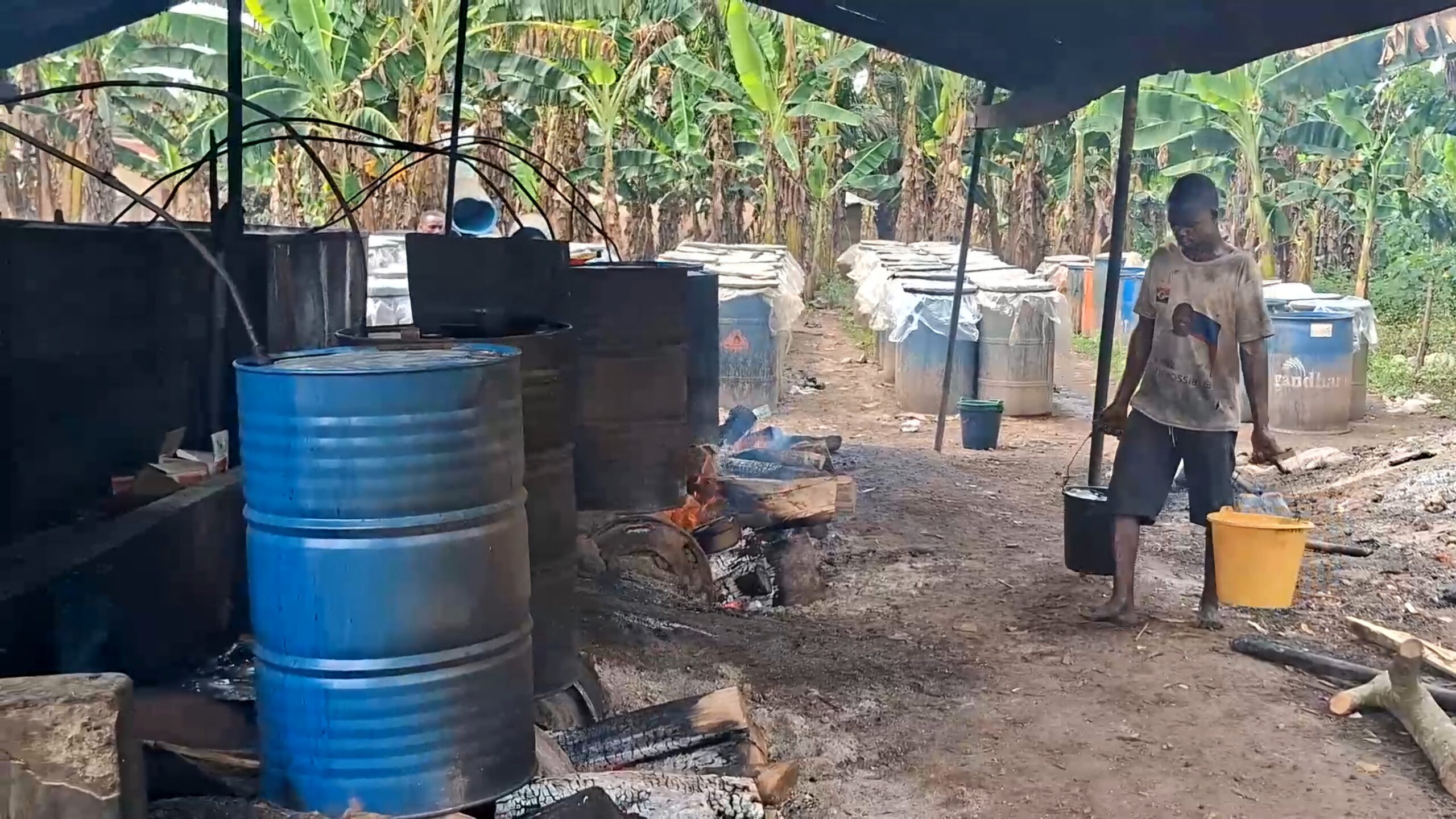
The brewing of local gin, popularly known as akpeteshie, is common across Ghana. But in Jato, a community in the Suhum Municipality of the Eastern Region, producers say their preparation process sets them apart.
Unlike the traditional method of fermenting palm wine or sugarcane juice, brewers in Jato rely on a carefully measured mixture of left-over palm wine, water, sugar and yeast.
“This is the preparation of the alcohol, what is locally known as the appetiser,” explained Andrews Amu, a resident whose family operates one of the distillation sites. “Sugar is poured into the barrels containing leftover palm wine, about two buckets in each, then water is and yeast, the one used in making bread, is put on top.”
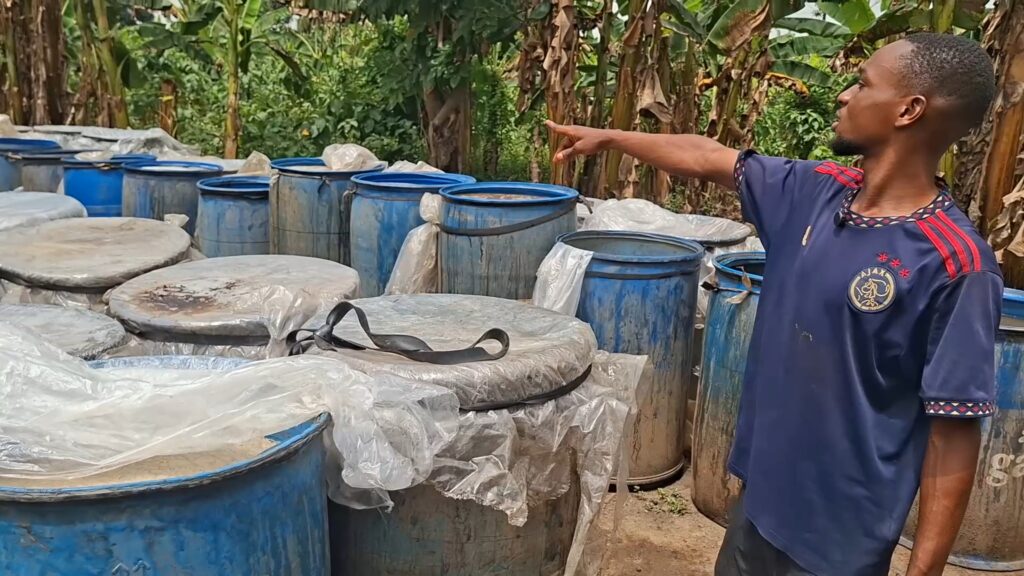
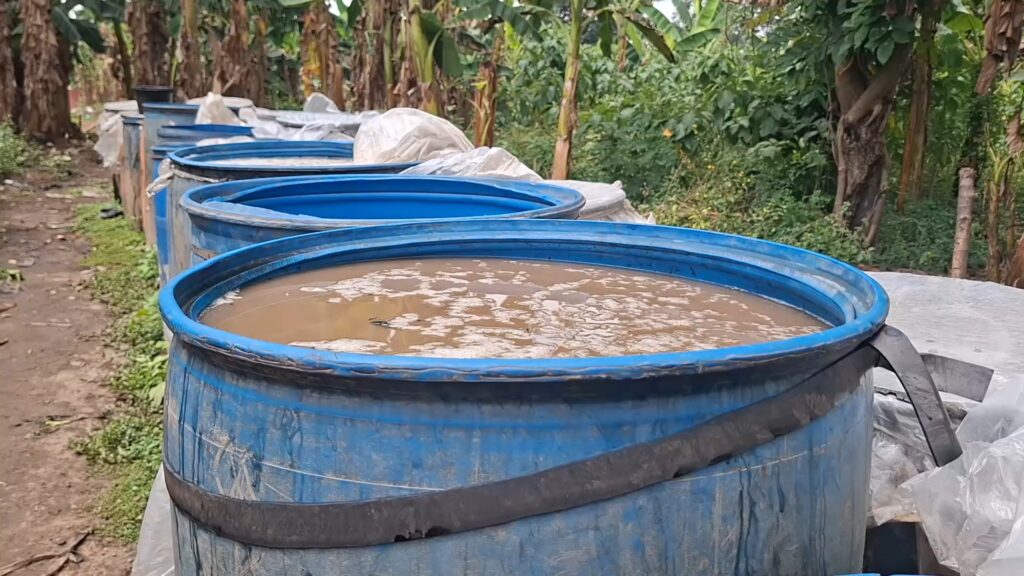
The mixture is sealed and left to ferment for up to two weeks before distilling begins.
“When it is fermented, you wait for a maximum of two weeks,” Mr. Amu said. “After two weeks, this is what you are going to get… then it is ready to be cooked as the alcohol.”
The Distilling Process
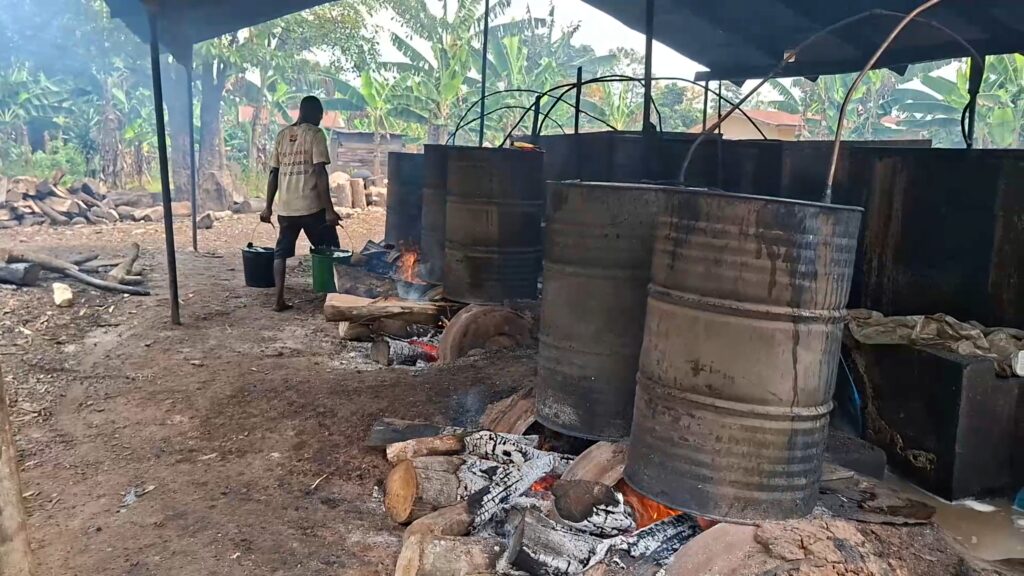
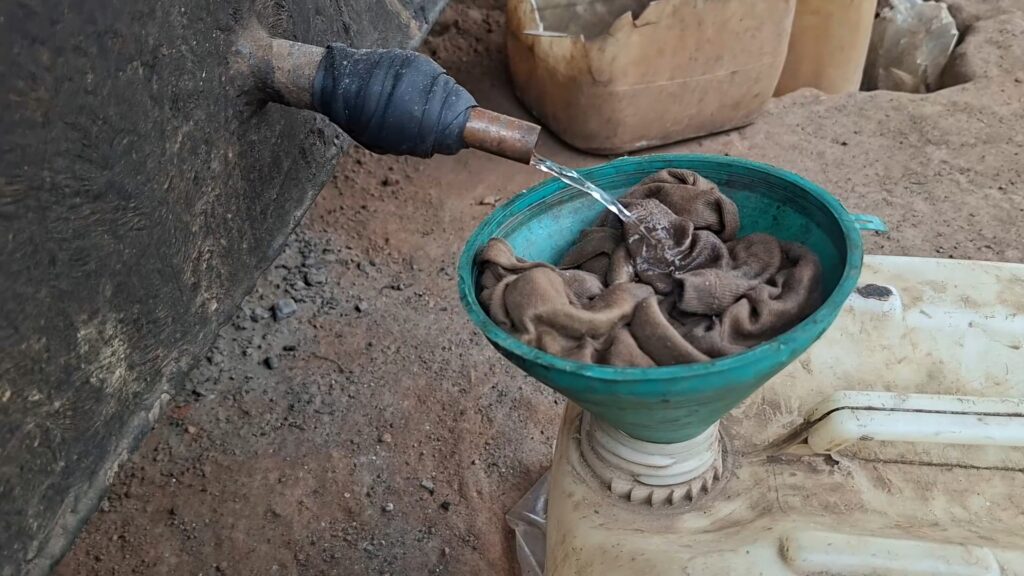
After fermentation, the substance is boiled over fire in metal containers. Vapour from the boiling mixture passes through connected pipes into a cooling chamber filled with water. The vapour then condenses into clear alcohol.
“When it boils, the vapour passes through these pipes and then gets to the water,” Mr. Amu explained. “That is when that vapour turns into alcohol and the alcohol comes out from the side.”
Production capacity depends largely on equipment.
“As you can see, these people have only two pipes at their shop. So in a day they can make about one barrel,” he said. “Having about six pipes can give you about two and a half to three barrels a day.”
Beyond Cocoa Farming
Jato is widely known as a cocoa-growing community. However, many residents depend on local gin production as an additional and sometimes primary source of income.
“In a month we can sell about 20 to 30 barrels,” Mr. Amu disclosed. “Some go to Accra and then Tamale and other parts of the country.”
The industry therefore plays a significant role in supporting livelihoods within the community.
Rising Costs and Poor Roads
Despite steady demand, producers say they are facing mounting challenges.
“The prices of the things that are used in the process are very costly nowadays,” Mr. Amu said.
He also pointed to poor road networks as a major obstacle.
“We have very bad roads here, which makes transportation very difficult. Sometimes drivers refuse to come because of the roads.”
Need for Support and Improved Standards
Producers in Jato are appealing for government support to improve infrastructure and stabilise input costs.
They also acknowledge that hygienic conditions surrounding the production process could be enhanced. With technical guidance and regulatory support, they believe sanitation standards could be improved to boost consumer confidence and expand market access.
Residents say with better roads, improved hygiene standards and stable production costs, Jato’s distinctive method of brewing akpeteshie could grow to complement cocoa farming as a major pillar of the local economy.

For many families in this quiet farming community, the steady drip of distilled alcohol represents more than tradition, it represents survival.