By Jones Anlimah
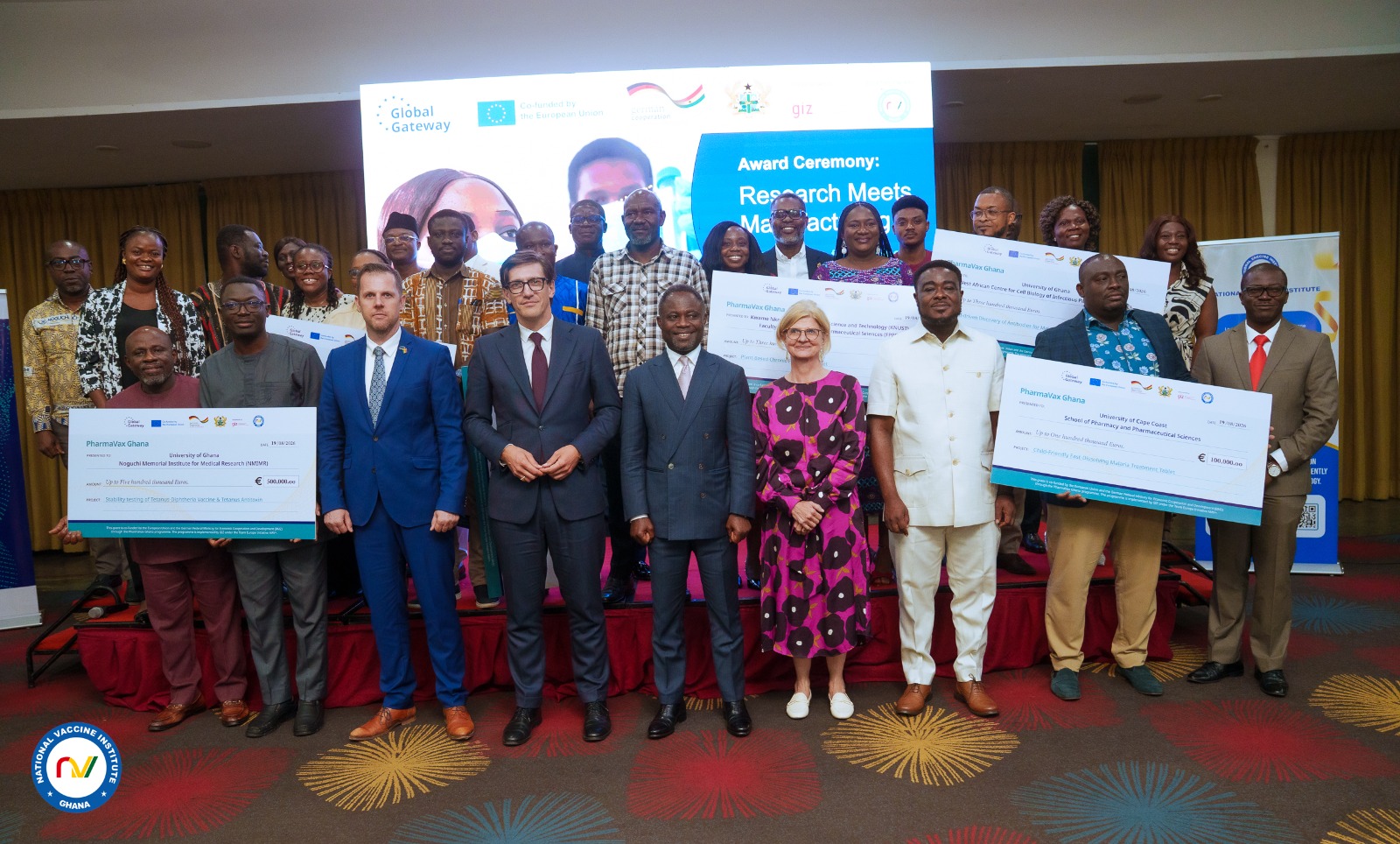
Eight research and development projects involving Ghanaian research institutions and pharmaceutical companies have received grants totalling EUR 2 million under the PharmaVax Ghana Programme to support the development of locally made medicines, vaccines and other health solutions.
The grants, presented at a “Research Meets Manufacturing” award ceremony in Accra, are intended to bridge the gap between scientific research and commercial pharmaceutical production while strengthening Ghana’s capacity to manufacture health products locally.
The programme is being implemented by the National Vaccine Institute (NVI) and the Deutsche Gesellschaft für Internationale Zusammenarbeit (GIZ), with funding from the German Federal Ministry for Economic Cooperation and Development (BMZ) and the European Union (EU).
The projects cover a wide range of innovations, including child-friendly malaria medicines, plant-based treatments for chronic diseases, vaccine stability studies and the use of artificial intelligence to accelerate the discovery of antibodies for malaria and Mpox.
Ghanaian project partners are also contributing a combined EUR 425,000 towards the implementation of the projects, demonstrating their commitment to locally driven pharmaceutical research and development.
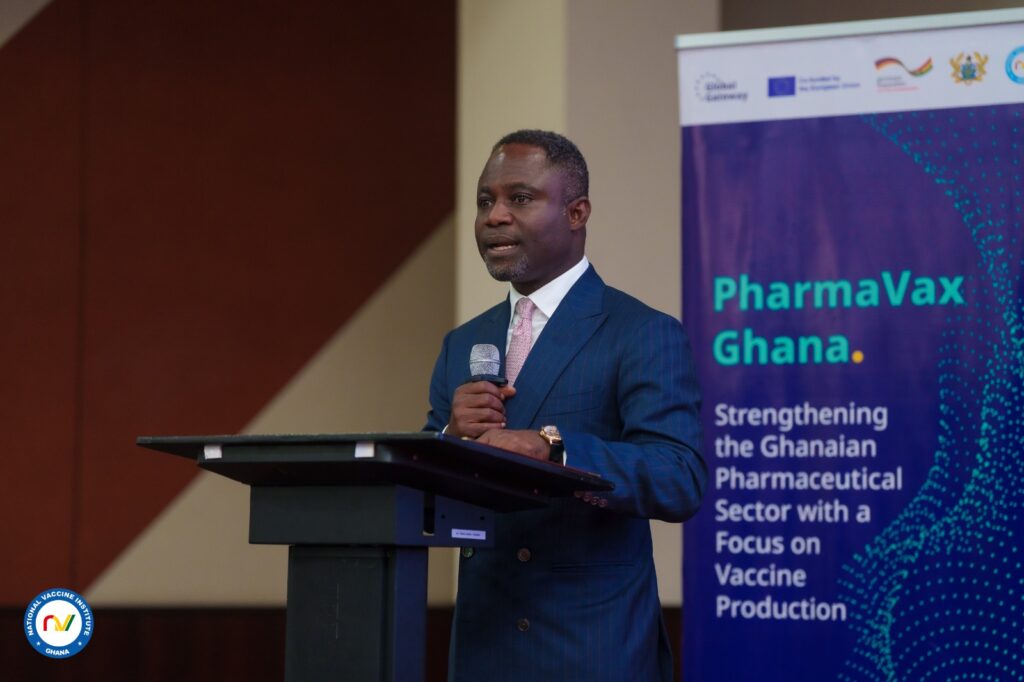
Speaking at the ceremony, the Minister of Health, Kwabena Mintah Akandoh, said the initiative goes beyond the awarding of grants, describing it as an important step towards transforming scientific research into practical health solutions.
“This ceremony marks the beginning of an important journey – a journey that brings researchers, manufacturers, government and international partners together to transform scientific discoveries into medicines and vaccines that save and improve lives.”
The Chief Executive Officer of the National Vaccine Institute, Dr Sodzi Sodzi-Tettey, said Ghana had the scientific expertise and an increasingly capable pharmaceutical industry required to develop health solutions tailored to the country’s needs.
“By bringing these strengths together, we are creating the foundation for medicines and vaccines that are developed in Ghana, manufactured in Ghana, and have the potential to benefit the wider region.”
The projects were selected through a competitive call for proposals jointly organised by the NVI and GIZ.
An independent committee of nine Ghanaian experts assessed 43 proposals, considering factors including technical merit, public benefit, participation of local manufacturers and the sustainability of the research beyond the project period.
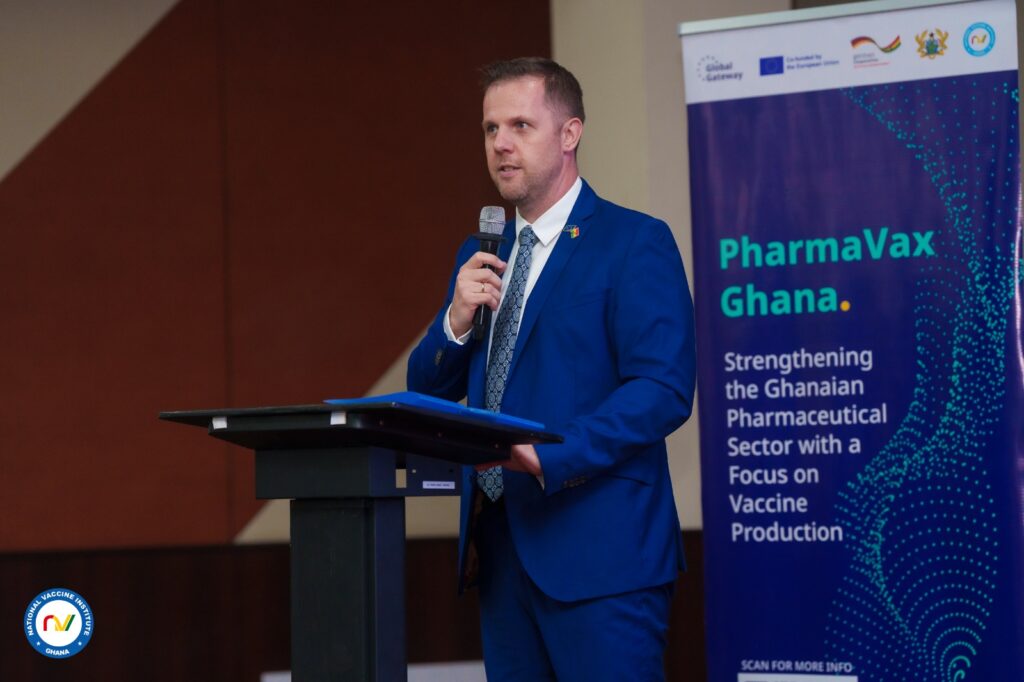
In addition to financial support, successful project teams are expected to benefit from technical assistance, networking and knowledge exchange aimed at strengthening research capacity and facilitating the commercialisation of their innovations.
Among the funded initiatives, Kwame Nkrumah University of Science and Technology (KNUST), in partnership with Aspee Pharmaceuticals Limited and the Ghana Atomic Energy Commission, received EUR 300,000 to optimise a locally developed herbal pain medicine for sustainable and scalable local manufacturing.
The University of Cape Coast, working with Kash Chemist Limited, received EUR 100,000 to develop a fast-dissolving oral tablet for treating malaria in children, with the aim of improving dosing accuracy and treatment adherence.
The Noguchi Memorial Institute for Medical Research of the University of Ghana, in collaboration with Atlantic Lifesciences Limited, secured EUR 500,000 to generate stability data needed to support regulatory approval and strengthen local production of tetanus-diphtheria vaccines and tetanus antitoxin.
The Council for Scientific and Industrial Research-Water Research Institute, together with Kantanka Herbal Pharmaceuticals and Research Centre Limited, received EUR 125,000 to generate scientific evidence on the safety and effectiveness of herbal treatments for alcohol-related liver disease and support their scale-up.
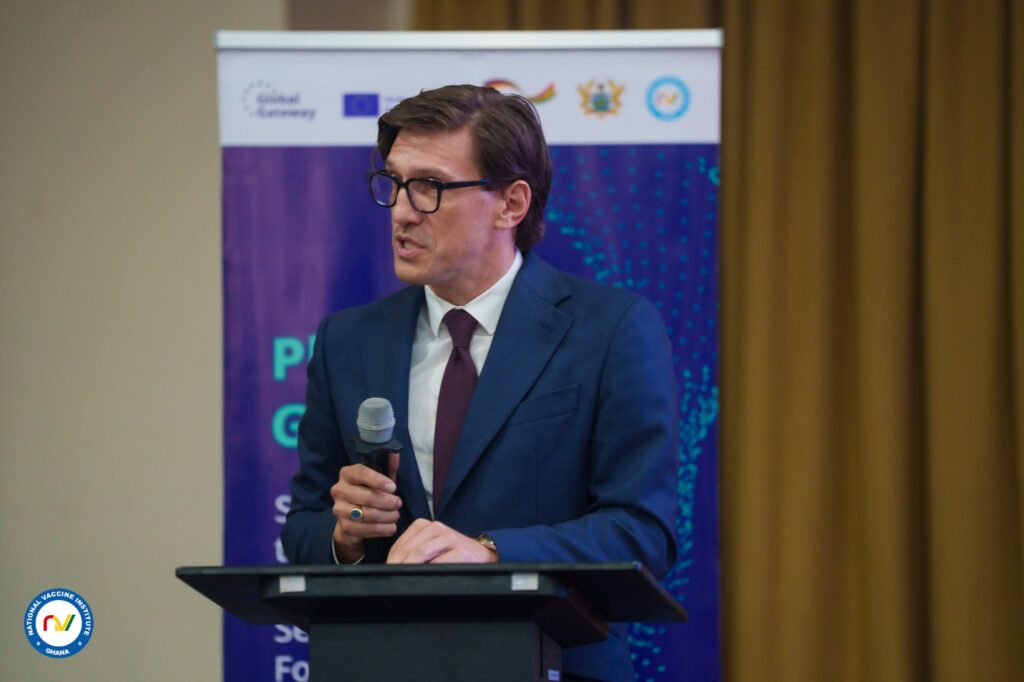
The Centre for Plant Medicine Research, in partnership with Dodowa Health Research Centre and Atlantic Lifesciences Limited, is implementing two projects supported by EUR 340,000. One will assess the safety and efficacy of a locally developed herbal product for prostate health through clinical trials, while the other will generate stability data for a locally produced snake venom antiserum with an extended shelf life.
Another project involving the West African Centre for Cell Biology of Infectious Pathogens at the University of Ghana, DEK Vaccines Limited, minoHealth AI Labs Limited and INCAS Diagnostics & Services Limited, received EUR 300,000.
The project will use a Ghanaian artificial intelligence platform to support the design and scale-up of monoclonal antibodies and diagnostics for Mpox and malaria, while building local manufacturing capacity.
Central University, in partnership with Ernest Chemists Limited, received EUR 250,000 to develop and validate a standardised herbal treatment for hypertension, with the objective of preparing it for large-scale local production.
The initiative forms part of the Team Europe Initiative Manufacturing and Access to Vaccines, Medicines and Health Technologies in Africa (MAV+), which seeks to strengthen Ghana’s pharmaceutical sector through research and development, skills development, regulatory strengthening, private-sector support, technology transfer and investment promotion.
The PharmaVax Ghana Programme is expected to contribute to Ghana’s broader efforts to build a resilient pharmaceutical industry, improve health security and position local pharmaceutical manufacturing as a strategic component of national economic development.
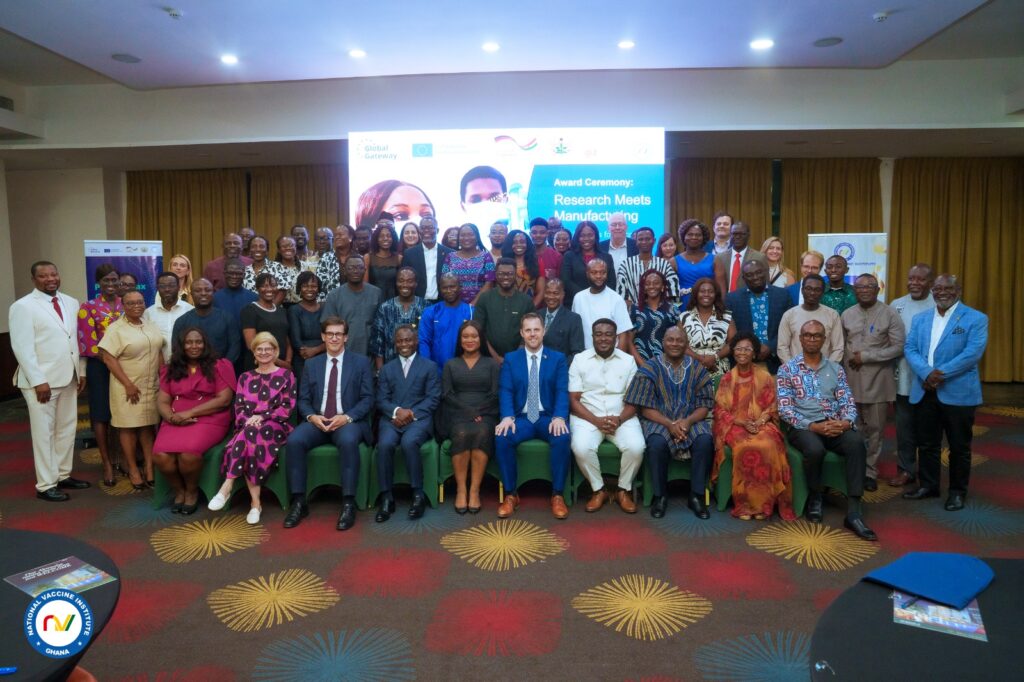
The award ceremony brought together government officials, researchers, academia, pharmaceutical companies and development partners, including the German Ambassador to Ghana, H.E. Frederik Landshöft, and representatives of the European Union Delegation to Ghana.