By Jones Anlimah
The Ghana Health Service (GHS) says the Community Scorecard Project can contribute significantly to Ghana’s efforts in achieving the Sustainable Development Goals (SDGs), particularly SDG 3 on good health and well-being and SDG 16 on peace, justice and strong institutions.
The Director of Policy, Planning, Monitoring and Evaluation Division of the GHS, Dr. Samuel K. Boakye-Boateng, said the Community Scorecard provides a structured mechanism for communities and health service providers to identify gaps in healthcare delivery, agree on practical solutions and monitor progress.
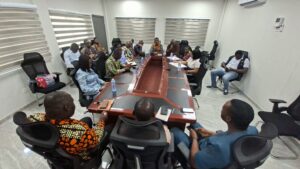
He was speaking at a webinar organised by the African Media and Malaria Research Network (AMMREN) in collaboration with the Ghana Health Service to engage journalists on the Community Scorecard Project.
Dr. Boakye-Boateng said the initiative was particularly important to the achievement of people-centred healthcare because it gives communities an opportunity to directly assess the services they receive.
“What communities say about the health services they receive is a matter of public interest, and their voices should help shape how those services improve,” he said.
The Community Scorecard was developed in 2018 by the Ministry of Health and the Ghana Health Service with support from the African Leaders Malaria Alliance (ALMA).
It enables communities and health service providers to assess health service experiences, identify what is working and what is not, examine the reasons behind identified challenges and agree on actions to address them.
Dr. Boakye-Boateng said the approach was not simply about generating scores but ensuring that the information generated translated into concrete improvements in service delivery.
“In essence, the scorecard creates a pathway from community experience, to evidence, to action,” he said.
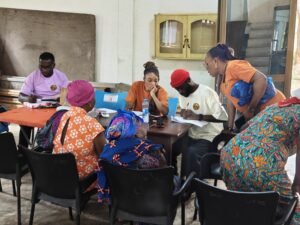
At the Community-based Health Planning and Services (CHPS) level, communities assess services quarterly across nine indicators and develop Community Health Action Plans based on concerns identified.
The scores and action plans are recorded in DHIMS2 and the Community Scorecard web platform to support monitoring and follow-up.
Dr. Boakye-Boateng said the process complemented routine health data by providing information on people’s actual experiences of healthcare.
“Routine information systems tell us how many clients attended, how many children were immunised and how many women received antenatal care,” he said.
“Those measures are essential. Alongside them, we must also understand whether clients felt respected, whether waiting times were reasonable, whether medicines and diagnostic services were available, and whether facilities were accessible, clean and safe.”
From community feedback to action
Dr. Boakye-Boateng stressed that the real value of the Community Scorecard lay in what happened after communities had identified and scored the various indicators.
He urged health managers to investigate the reasons behind poor scores and determine what could be addressed at facility, district, regional or national level.
“The value of a scorecard lies not in the colour of an indicator, but in what happens after the scoring session,” he said.
He said a red or yellow indicator should trigger questions about the cause of the problem, the institution responsible for addressing it and the timeframe for resolving it.
Dr. Boakye-Boateng said the media had an important role in ensuring that such commitments were not forgotten.
He urged journalists to move beyond reporting the announcement of interventions and follow up on whether agreed actions had been implemented.
“Follow the action, not only the announcement,” he told journalists.
He said journalists should ask what was agreed, who was responsible, whether commitments were being honoured and whether the interventions had resulted in improved services.
According to him, such reporting would help strengthen accountability and ensure that community concerns translated into measurable improvements.
Community participation and the SDGs
The GHS Director said strengthening community participation in healthcare was also important to reducing inequalities in access to quality services.
He said the scorecard process should ensure that the experiences of people whose concerns might otherwise be overlooked were reflected in health planning and decision-making.
He therefore called for the Community Scorecard to become part of routine health service management rather than remain a stand-alone project.
“Our ambition is to make community feedback a routine part of health service management rather than a stand-alone project,” he said.
He said sustainability would require the integration of community feedback into routine planning, supervision, performance reviews and resource allocation.
Dr. Boakye-Boateng identified three questions that should guide the review of scorecard findings: “What are communities telling us? What does the evidence require us to do differently? And how can we use that evidence to influence decisions and mobilise the support required?”
He said consistently moving from community voice to evidence, action and feedback would help strengthen public trust in the health system.
Media urged to amplify community voices
The Executive Secretary of AMMREN, Dr. Charity Binka, said the media had a critical role in ensuring that lessons emerging from communities were communicated beyond the immediate locations where the Community Scorecard was being implemented.
She said effective community participation and accountability required not only functional systems but also sustained information, communication and public engagement.
“The Community Scorecard approach therefore provides an important platform for communities and health service providers to come together, identify challenges, discuss priorities and contribute to improving the quality and responsiveness of health services,” she said.
Dr. Binka said journalists could help translate technical health information into accessible public knowledge, bring community concerns to the attention of decision-makers and highlight positive practices.
She said responsible and evidence-based reporting could also strengthen transparency, accountability and public confidence in the health system.
“When communities are informed, when health workers are engaged, and when the media has the knowledge and tools to report effectively, we create stronger pathways towards responsive and accountable health systems,” Dr. Binka said.
The webinar was organised with support from the Expertise France 5% Initiative Grant, with participation from the Ghana Health Service, African Leaders Malaria Alliance, Hope for Future Generations (HFFG), WAPCAS and other collaborating institutions.
The organisers believe sustained collaboration among communities, health service providers, policymakers and the media will be critical to translating community experiences into action and advancing Ghana’s progress towards the Sustainable Development Goals.