By Jones Anlimah
Media organisations in Ghana have been urged to adopt and implement the Model Safety of Journalists Policy to strengthen the protection of journalists against physical attacks, online harassment, intimidation, legal pressure and other occupational risks.
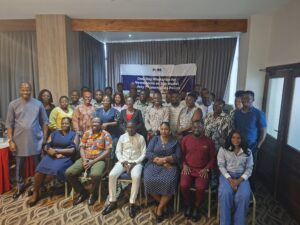
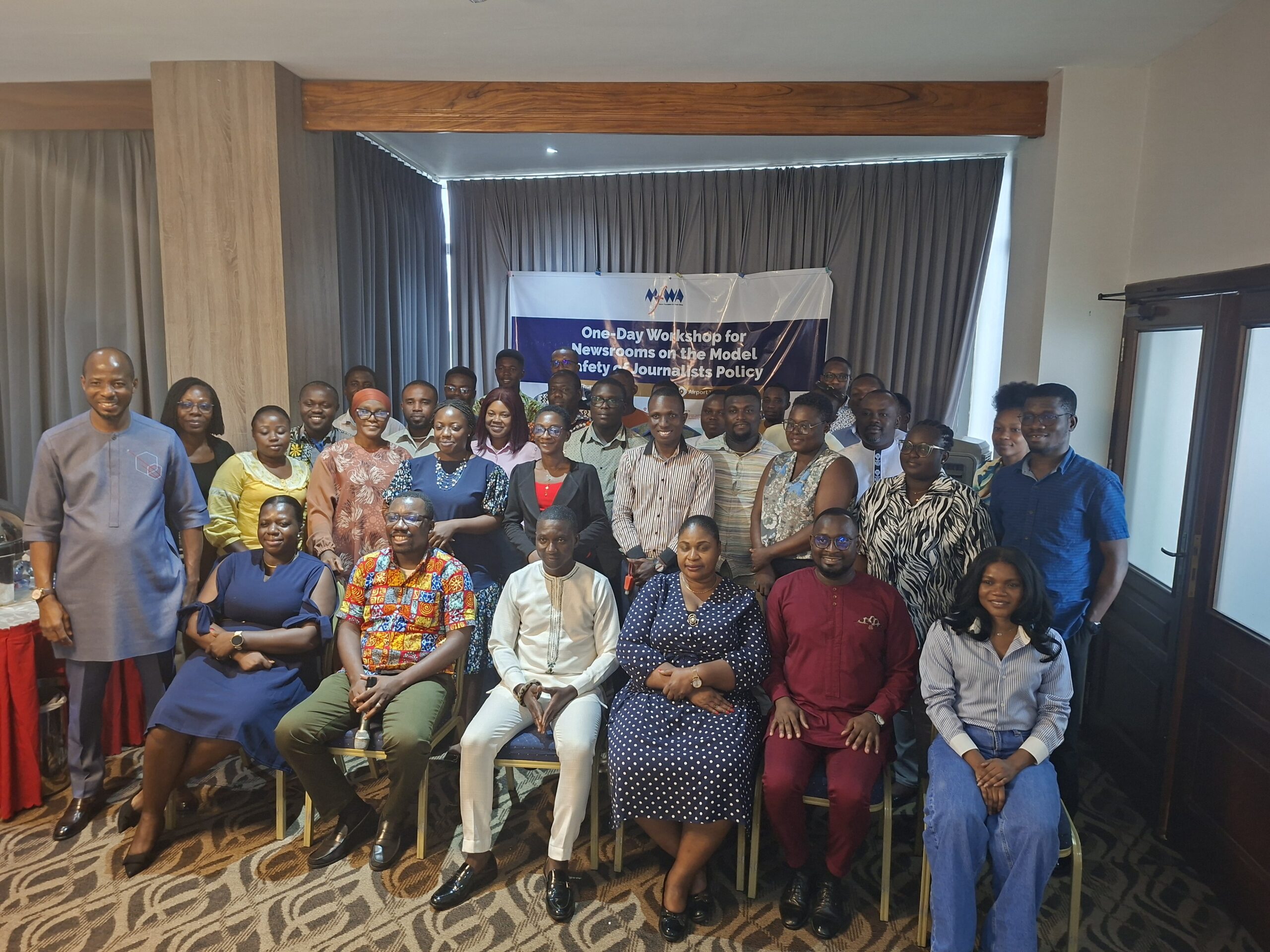
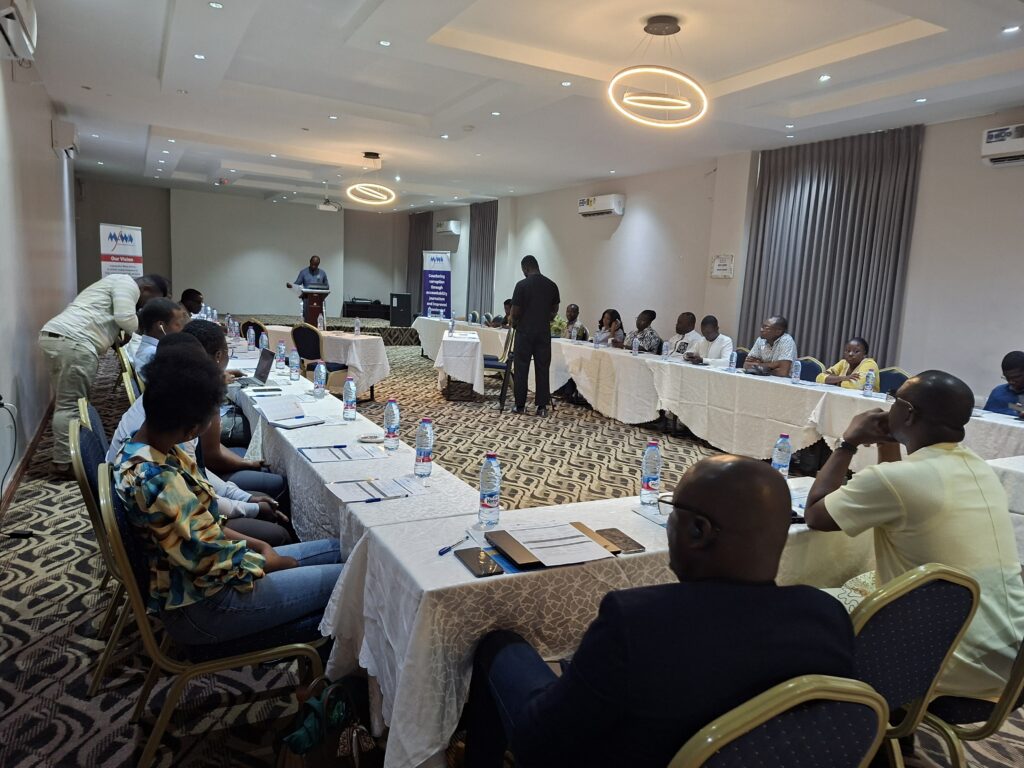
The call was made at a one-day workshop for journalists, editors and media managers in Accra, organised by the Media Foundation for West Africa (MFWA), to familiarise media practitioners with the policy and equip them with the knowledge to adapt it to their respective newsroom operations.
Programme Director of the MFWA, Dr Kojo Impraim, said the safety of journalists was fundamental to the practice of journalism and the protection of press freedom, stressing that the responsibility for ensuring their safety should not be left to individual journalists alone.
He noted that journalists, in the course of informing the public, exposing wrongdoing and holding public officials accountable, were increasingly exposed to various forms of threats, including physical attacks, online harassment, intimidation, legal pressure and psychological stress.
Dr Impraim cited the challenges confronting investigative journalists and those reporting on sensitive issues such as corruption, abuse of power and illegal mining, saying the threats undermined the media’s ability to serve the public interest.
He disclosed that the MFWA’s monitoring of violations against journalists recorded 32 cases across West Africa in the first quarter of 2026, increasing to 42 by the close of the second quarter.
According to him, attacks against journalists that go uninvestigated and unpunished create an environment that encourages further violations.
“Every act of violence committed against a journalist that goes uninvestigated, unpunished, is an open invitation for further violations and violence against journalists,” he said.
Dr Impraim explained that the Model Safety of Journalists Policy provided a practical framework for media organisations to establish procedures to protect journalists before, during and after field assignments.
The policy addresses critical areas including risk assessment, newsroom security, physical security, digital safety, legal support, emergency response, incident reporting and the psychological well-being of journalists.
He said media owners, managers and editors must recognise journalist safety as an institutional responsibility and make deliberate investments in systems that prepare and support reporters in the discharge of their duties.
“Adopting this policy should not be seen as an additional administrative responsibility. Rather, it is an intentional investment in the people who make journalism possible,” he stated.
Dr Impraim urged participants to champion the adoption of the policy in their respective organisations, adding that its effectiveness would depend on how well its provisions were translated into everyday newsroom practices.
Representing the German Development Corporation (GIZ), Mr Jonathan Donkor, Technical Advisor to the Participation, Accountability and Integrity for a Resilient Democracy (PAIReD) Programme, said the policy was the outcome of stakeholder engagements and a study on the safety of journalists.
He said the policy was developed through collaboration between GIZ and the MFWA under the project on Countering Corruption Through Accountability Journalism and Improved Freedom of Expression Environment in Ghana.
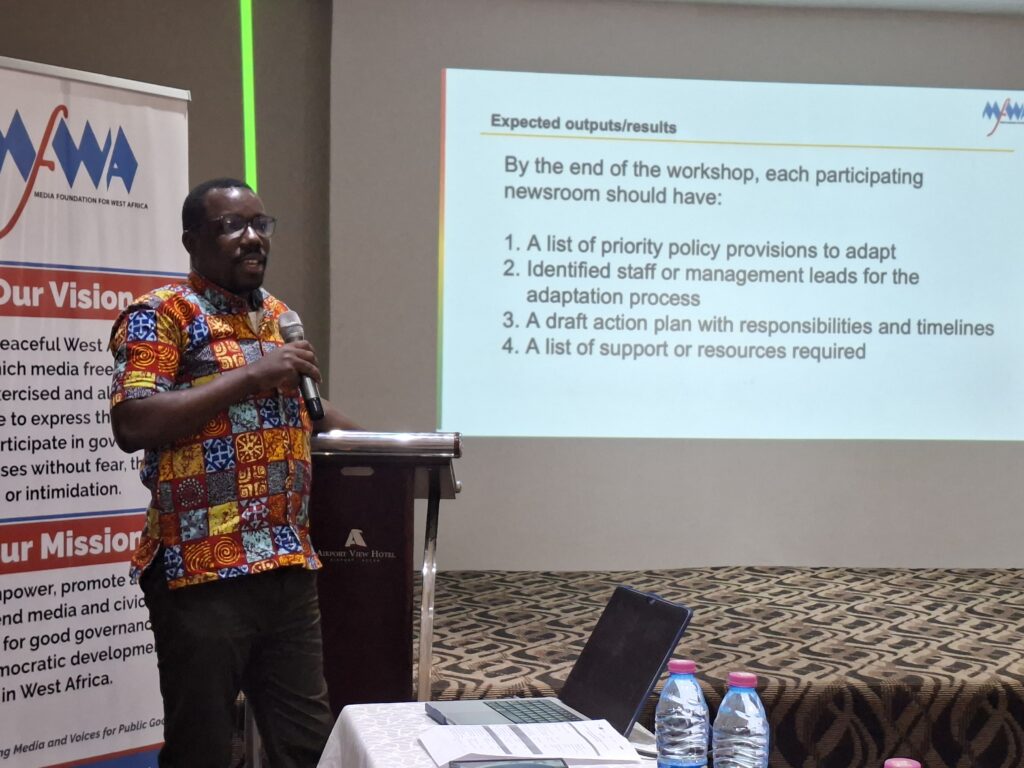
Mr Donkor, who delivered remarks on behalf of his superior, said journalists needed to remain safe to continue performing their watchdog role.
“If you ask many journalists why they chose this profession, including myself, I once practised as a journalist with the Ghanaian Times and before that, Ghana News Agency, our answers are usually the same or similar. We want to be the voice of the voiceless,” he said.
He added that the desire to speak for the voiceless also carried the responsibility of ensuring that journalists remained safe enough to continue telling important stories.
“A voice that is muffled or silenced cannot reach the duty bearer it is meant to reach,” he stated.
Mr Donkor expressed the hope that the policy would become a practical reference document for newsrooms whenever safety concerns arose, rather than being kept in archives without implementation.
He assured that GIZ, through the PAIReD Programme, would continue supporting initiatives aimed at improving the safety of journalists.
Workshop sessions
The workshop, facilitated by Dr Martin Thompson Ntem, Consultant and Lecturer at the University of Media, Arts and Communication-Institute of Journalism (UniMAC-IJ), took participants through the purpose, scope, principles and structure of the Model Safety of Journalists Policy.
Participants examined threats and risks associated with journalism, including physical, digital, legal, psychological and gender-related risks, as well as the responsibilities of newsrooms in addressing them.
The sessions also covered key policy provisions on prevention, preparedness, incident reporting, response, support and accountability.
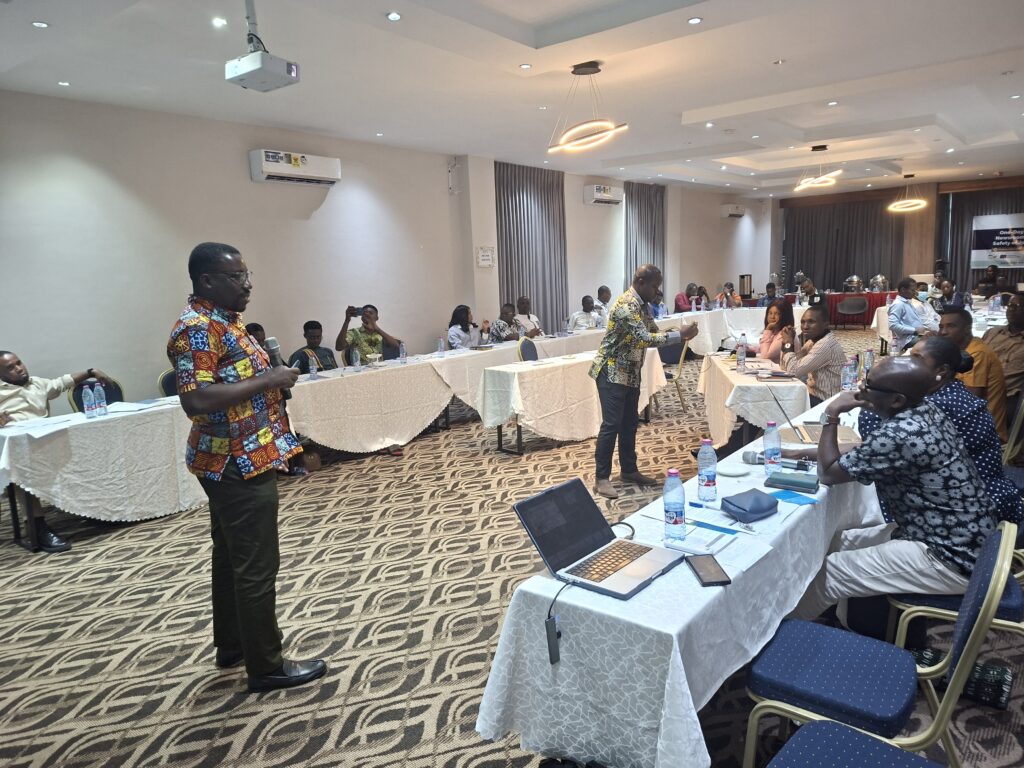
Through risk-mapping exercises and group discussions, participants explored potential vulnerabilities within their organisations and assessed existing newsroom safety measures and gaps.
They were also taken through a newsroom safety audit and facilitated group exercises on adapting the model policy to suit the operational context, resources and coverage needs of individual media organisations.
A scenario-based exercise further exposed participants to practical approaches to responding to safety incidents, while an action-planning session focused on developing implementation plans covering responsibilities, timelines, training, communication and review mechanisms.
The workshop forms part of broader efforts by the MFWA and its development partners to strengthen accountability journalism and improve the freedom of expression environment in Ghana.
The organisers expressed the expectation that participating media organisations would take the necessary steps to adapt and implement the policy to create safer working environments for journalists.