By Jones Anlimah
Women, Media and Change (WOMEC) has called on the Government of Ghana to prioritise domestic financing of essential nutrition commodities to reduce the country’s dependence on donor support and safeguard the health of women and children.
The organisation says sustained government investment is critical to ensuring the availability of life-saving nutrition interventions, particularly Ready-to-Use Therapeutic Food (RUTF) for children with severe acute malnutrition and Multiple Micronutrient Supplements (MMS) for pregnant women.
The call is contained in a released position paper titled “Financing Nutrition Commodities in Ghana,” which identifies gaps in the financing of essential nutrition interventions and proposes measures to strengthen domestic resource mobilisation and accountability.
According to WOMEC, approximately 61,600 children in Ghana experience severe acute malnutrition annually, but only 15 per cent receive treatment, highlighting significant gaps in access to essential nutrition services.
The organisation notes that while government supports aspects of nutrition service delivery, including training, infrastructure and data systems, the supply of Multiple Micronutrient Supplements remains entirely dependent on external funding.
It warns that changes in donor priorities and possible funding reductions could disrupt the supply of these essential commodities and undermine maternal and child health interventions.
The position paper follows a high-level stakeholder engagement organised by WOMEC on October 1, 2026, on the sidelines of the Micronutrient Forum Global Conference in Accra, with support from the Eleanor Crook Foundation.
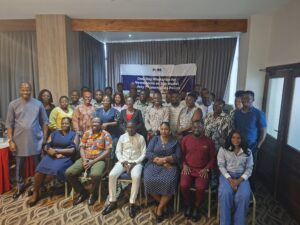
The engagement brought together representatives from the Ghana Health Service, National Health Insurance Authority, National Development Planning Commission, Parliament, academia and CHAI Ghana to discuss financing challenges and explore sustainable funding options.
WOMEC is recommending a phased financing plan to progressively increase government contributions towards the procurement and distribution of essential nutrition commodities.
It is also urging the Ministry of Health and the National Health Insurance Authority to accelerate processes towards including RUTF and MMS in the National Health Insurance Scheme benefits package.
The organisation has further called for clarity on the extent to which the commodities are covered under the Free Primary Healthcare policy to prevent gaps in access and service delivery.
Other recommendations include improved costing and evidence generation, dedicated budget-tracking mechanisms for nutrition commodities, strengthened district-level budgeting and enhanced parliamentary oversight of government allocations and expenditure.
WOMEC believes the uncapping of the National Health Insurance Levy presents an opportunity for Ghana to strengthen domestic financing for essential health interventions, including maternal and child nutrition.
However, it says effective implementation will require deliberate budgetary prioritisation, institutional coordination and transparent monitoring of resources.
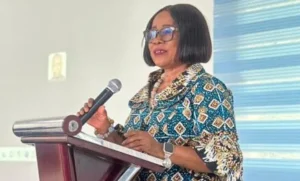
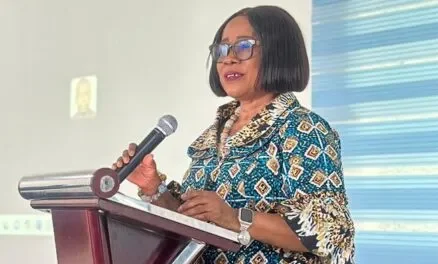
The Executive Director of WOMEC, Dr. Charity Binka, says nutrition financing must be treated as a national development and human capital investment priority rather than merely a health-sector expenditure.
She is calling on the Ministries of Health and Finance, the Ghana Health Service, NHIA, NDPC, Parliament and development partners to collaborate in establishing a sustainable financing framework for essential nutrition commodities.
WOMEC also wants development partners to support Ghana’s transition towards domestic financing through technical assistance and evidence generation, while ensuring that external assistance complements rather than replaces government responsibility.
The organisation maintains that inadequate investment in nutrition has far-reaching consequences for child survival, physical growth, cognitive development, educational attainment and national productivity.
It is therefore urging government to translate its policy commitments into concrete budgetary action to ensure that no child is denied treatment for severe acute malnutrition and no pregnant woman is deprived of essential micronutrient support because of financial constraints.