By Jones Anlimah
Technical universities have been urged to lead with clarity in the midst of complexity, act with responsibility in the midst of uncertainty and build institutions that are as adaptable as they are purpose-driven if they are to remain relevant and effective in an era increasingly shaped by Artificial Intelligence (AI).
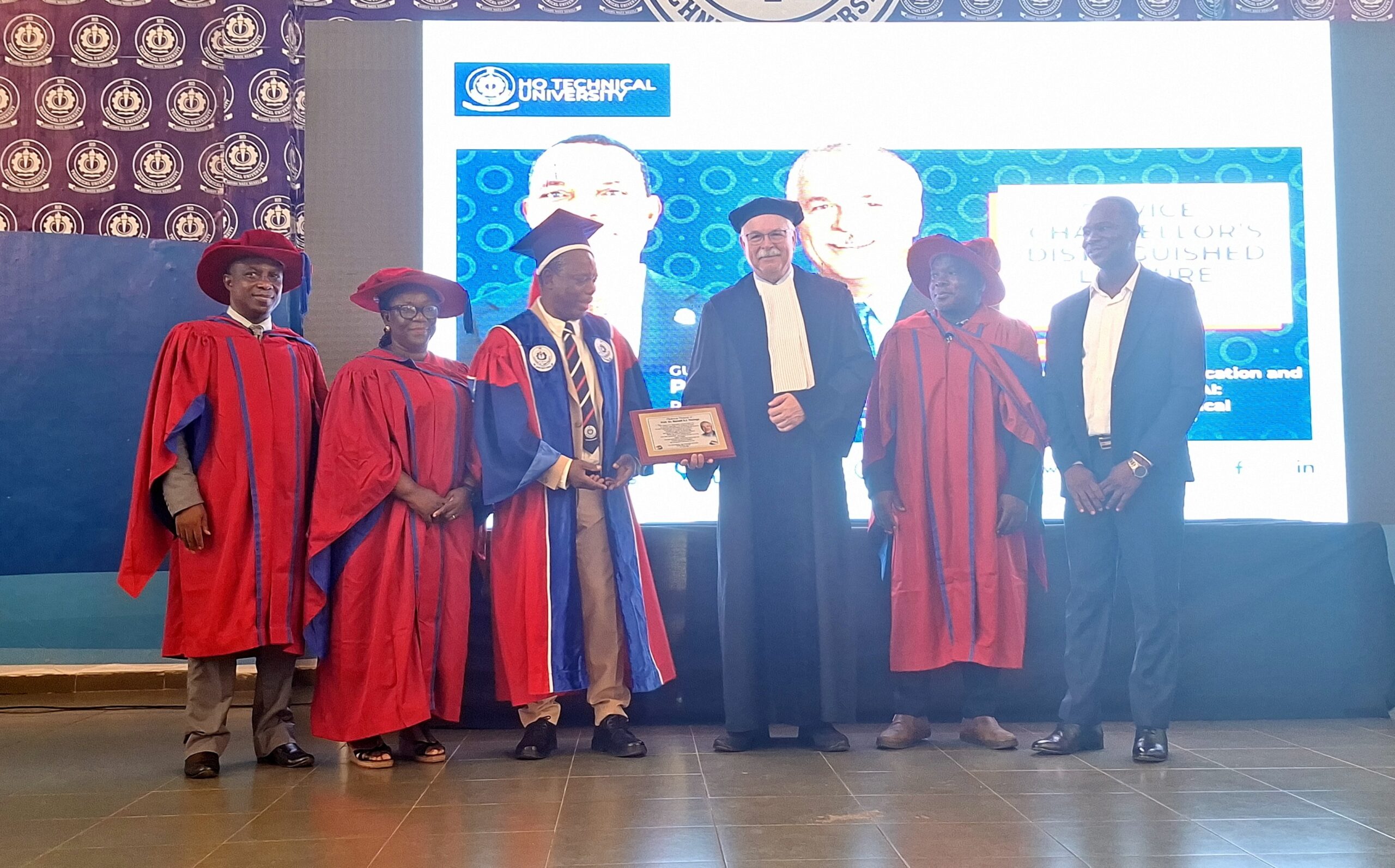
Rector of Wittenborg University of Applied Sciences in the Netherlands, Professor Dr. Ron Tuninga, made the call at the 7th Vice-Chancellor’s Distinguished Lecture of the Ho Technical University (HTU) in the Volta Region.
The lecture, held under the theme, “Business Practice Education and Research in the Era of AI: Implications for Technical Universities in Ghana,” brought together academics, students, industry leaders, government officials and other stakeholders to examine how AI is transforming higher education, research and the future of work.
Professor Tuninga said the rapid advancement of AI and other emerging technologies presents both opportunities and challenges for educational institutions, making it necessary for universities to rethink how they prepare students for an evolving labour market.
According to him, universities must focus on producing graduates who possess critical thinking, creativity, ethical reasoning, analytical skills and the ability to adapt continuously to technological change.
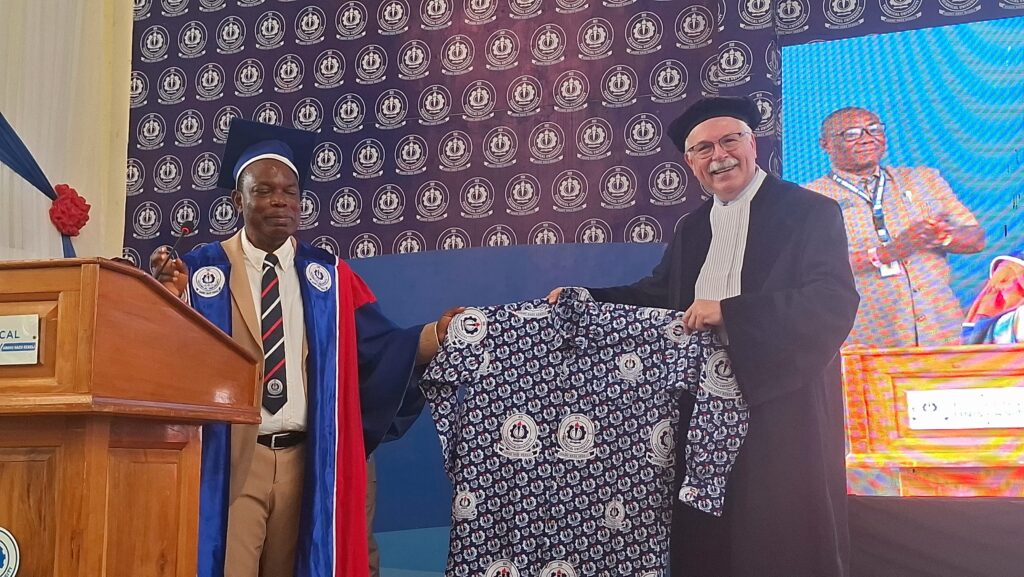
“At the end of your studies, you have to look in the mirror. If that mirror says ChatGPT when it looks at you, then you have done the wrong thing, because you have no value added in the job market,” he said.
The Rector noted that although AI is expected to automate many routine tasks and alter entry-level employment opportunities, it will also create new roles and opportunities for individuals equipped with the right skills.
“It is not about jobs, but it is about tasks that will disappear. That means new jobs will have to be created,” he explained.
Professor Tuninga stressed that critical thinking would remain one of the most valuable competencies in the future workforce and cautioned students against overreliance on AI-generated information.
“Critical thinking is essential. If you walk away from Ho Technical University without critical thinking, then you’re not going to get too many jobs,” he stated.
He also advocated the development of African-centred AI infrastructure and policy frameworks capable of addressing local realities and development priorities.
“Ghana, or maybe Africa, needs an AI infrastructure that is yours, and not someone else’s,” he said, urging governments, universities and industry to collaborate in building locally relevant AI solutions.
The Vice-Chancellor of Ho Technical University, Professor Ben Q. Honyenuga, said AI was fundamentally changing the way people learn, teach, conduct research and do business.
“AI is transforming how we learn, teach, research and conduct business in almost all fields of work,” he said.
Professor Honyenuga observed that educational institutions must embrace emerging technologies to remain relevant and responsive to societal needs.
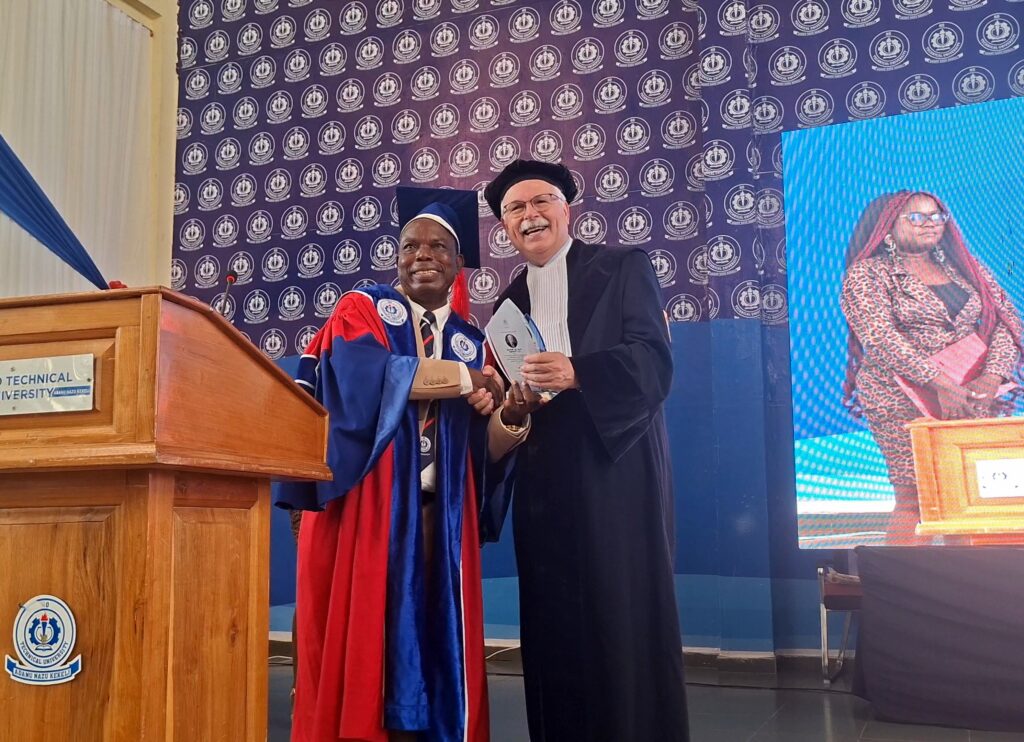
“To harness the potential of AI and meet society’s evolving needs, there is a need to embrace and continually engage with these technologies to enhance performance,” he noted.
He said Ho Technical University was continuously exploring ways to integrate AI and other emerging technologies into its curriculum, strengthen research capacity and deepen engagement with industry and international partners.
“As a technical university committed to career-focused education, applied research, innovation and industry engagement, Ho Technical University acknowledges the immense opportunities and challenges that AI presents,” he stated.
The Vice-Chancellor said the annual distinguished lecture series seeks to stimulate intellectual discourse, generate new insights and encourage research that addresses the needs of industry and society.
The lecture concluded with a call for stronger collaboration among universities, policymakers and industry to ensure that Ghana’s technical universities remain competitive and responsive in an AI-driven global economy.
The lecture formed part of HTU’s annual distinguished lecture series aimed at stimulating intellectual discourse, generating new insights and promoting research that addresses industry and societal needs.