By Jones Anlimah
The Minister for Communication, Digital Technology and Innovations, Mr Samuel Nartey George (Esq), has given the contractor executing the Rural Telephony Project (RTP) a 30-day ultimatum to complete outstanding works or face financial sanctions.
He said the government had fully paid for the project and would not tolerate further delays in delivering the expected services to communities targeted under the initiative.
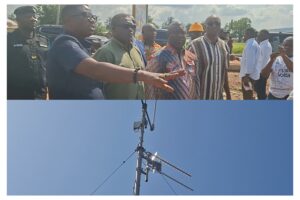
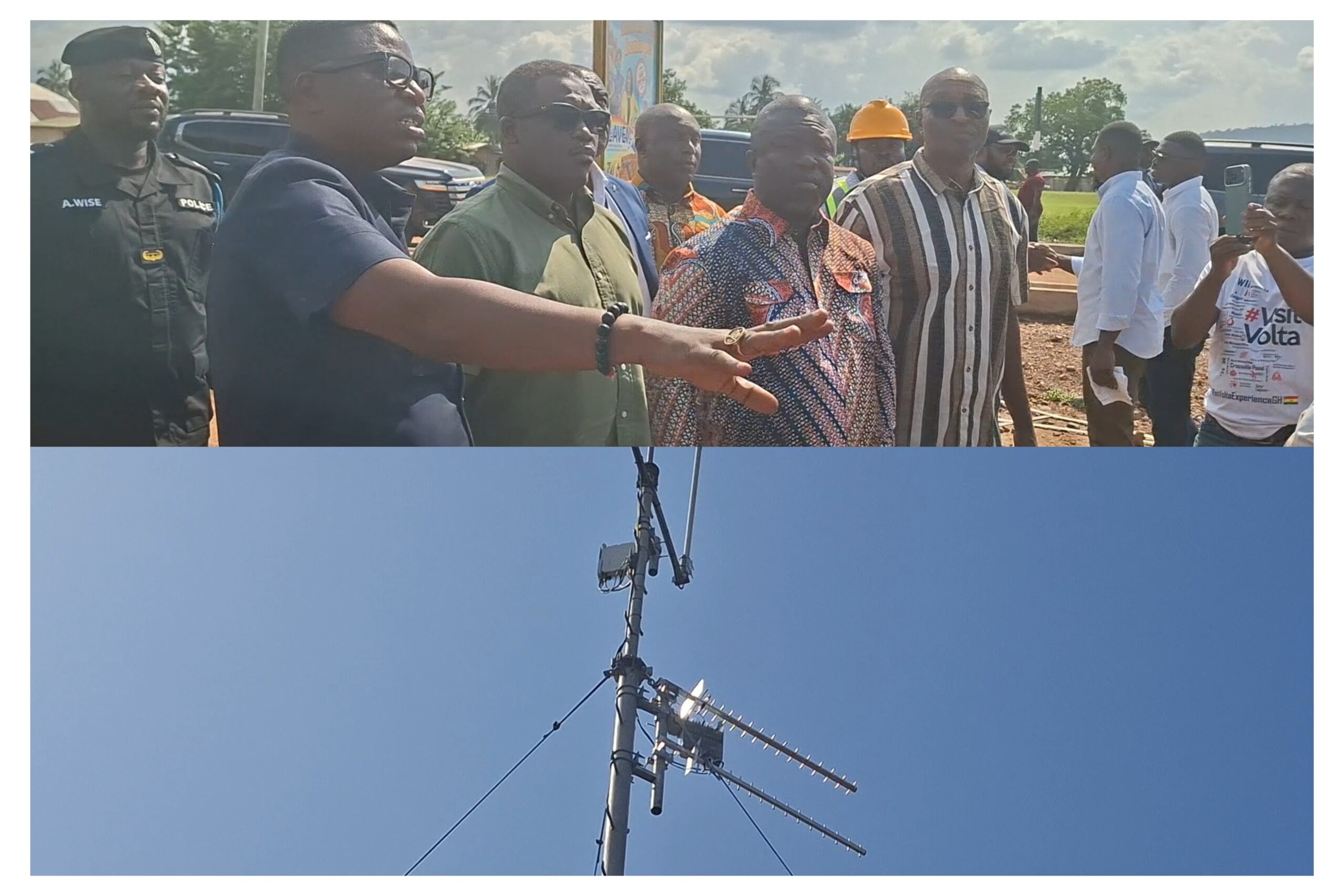
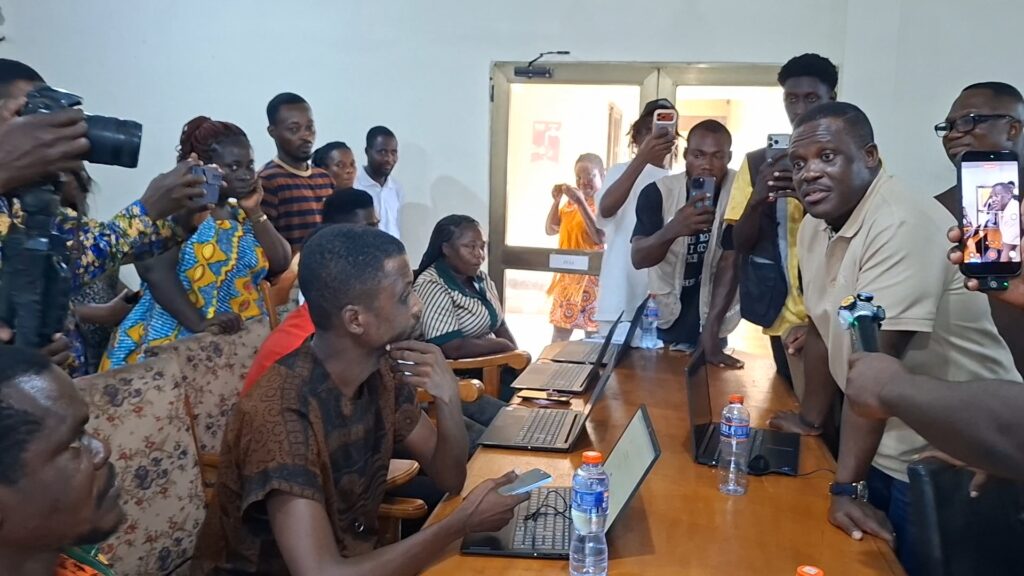
The minister gave the directive during a two-day monitoring tour of Rural Telephony Project sites and information centres in the Volta Region to assess progress, identify operational challenges and evaluate the state of telecommunications infrastructure in underserved communities.
“We’ve paid them in full. There was a completion date that has gone past. I’m unhappy that I still see some sites that have not been completed,” Mr George said.
He said a meeting would be held with the contractor and its subcontractors to reconcile the status of the project and establish the outstanding works before the 30-day deadline took effect.
The minister warned that contractors who failed to meet the deadline would face financial penalties, stressing that disagreements between contractors and subcontractors should not prevent the government from obtaining the services for which it had paid.
“We’ve paid. Give us our service,” he stressed.
Inspection of RTP sites and information centres
The itinerary for the two-day tour covered Ho, Agortime Ziope and Adaklu, with visits to existing and newly developed Rural Telephony Project sites, as well as centres established to improve access to information and digital services.
On the first day, the minister visited the Volta Regional Minister, followed by the Ho Community Information Centre under the government’s One Million Coders Programme (OMCP).
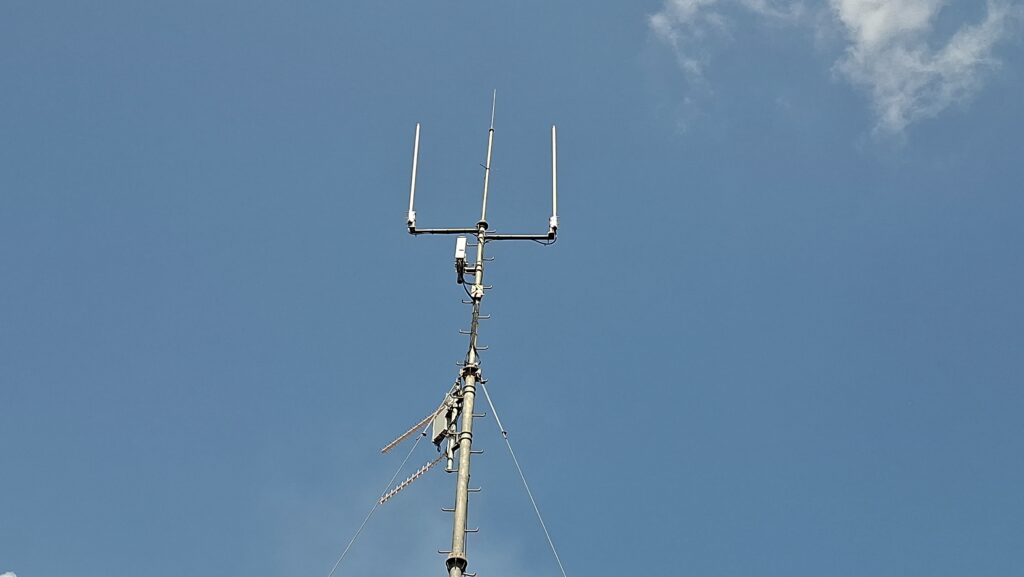
He was also scheduled to inspect the new RTP site at Akoefe Gadza in the Ho Central Constituency.
The programme subsequently included a visit to the Silverstone Youth ICT Lab, an OMCP centre in Agortime Ziope, and the old RTP site at Akoete in the same constituency.
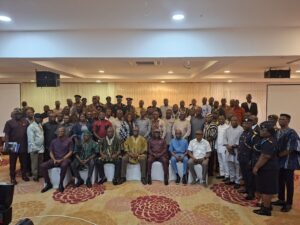
The second day was scheduled to begin with a gathering at the Ho Regional Information Centre (RIC), followed by a visit to the University of Health and Allied Sciences (UHAS).
The minister was then expected to inspect the old RTP site at Adaklu-Blidokope, visit the OMCP centre at Adaklu-Waya, and assess new RTP sites at Adaklu-Dawanu and Adaklu-Kpetsu.
The visits were intended to provide an opportunity to assess the progress of rural connectivity infrastructure and the delivery of digital skills and information services in the region.
More than 1,600 RTP sites reportedly completed
Providing an update on the Rural Telephony Project, the Minister said about 1,600 of the 2,016 sites under the project had been reported as completed, with approximately 1,400 active and transmitting traffic at the time of his last update.
He said the government would reconcile the figures with the contractor to establish the precise status of the sites and determine the work remaining.

The minister, however, cautioned that completing the existing project would not mean that all communities in Ghana had been connected to telecommunications services.
“We still have close to about 5,000 communities that we need to connect,” he said.
Mr George said the government remained committed to extending connectivity to underserved communities and hoped that resources would be made available in the 2027 national budget to support further expansion.
He also called for existing telecommunications infrastructure to be upgraded from 2G and 3G technology to 4G to improve network quality and provide users with better access to digital services.
Fibre cuts threaten telecommunications services
The minister identified frequent fibre-optic cable cuts as another major challenge affecting telecommunications services across the country, including connectivity to rural telephony sites.
He explained that damage to fibre infrastructure in one location could disrupt several mobile network sites in other communities because of the interconnected nature of telecommunications networks.
Mr George cited the Esikuma stretch as an example, explaining that a fibre cut there had affected a Telecel mast at Wire and consequently disrupted connectivity to rural telephony sites at Agotime Ziope, Bledokope and Davano.
He said the incident demonstrated how damage to a single section of the network could affect telecommunications services in multiple communities.
According to the minister, Ghana had recorded more than 4,000 fibre cuts by around June 2026, while telecommunications operators spent more than 20 million dollars repairing fibre damage in 2025.
He said the resources spent on repairs could otherwise have been invested in expanding network coverage and constructing additional telecommunications sites.
Mr George attributed the damage to several factors, including road construction, illegal mining activities, excavation works and the careless handling of underground telecommunications infrastructure.
He called for stronger coordination among the Ministry of Communication, Digital Technology and Innovations, the Ministry of Roads and Highways, telecommunications operators and other relevant agencies to reduce disruptions.
The minister also disclosed plans to restructure the National Engineering Coordination Team to improve information-sharing and coordination before road construction and other excavation projects commenced.
The arrangement is expected to help identify telecommunications infrastructure along road corridors and give network operators sufficient notice to relocate vulnerable fibre installations before excavation begins.
Government commits to expanding digital access
Mr George said the government remained committed to improving telecommunications access in rural and underserved communities, emphasising the importance of connectivity to economic development and access to essential services.
He said completing the ongoing Rural Telephony Project would be an important step towards reducing the digital divide but acknowledged that additional investments would be required to connect the thousands of communities still without adequate telecommunications coverage.
The minister also urged the public to help protect telecommunications infrastructure, warning that vandalism and careless activities around fibre chambers could result in widespread service interruptions.
He said collaboration among government agencies, telecommunications operators and local communities would be essential to improving network reliability and ensuring that investments in rural connectivity delivered the intended benefits.
The two-day monitoring tour formed part of efforts to assess rural telecommunications infrastructure and digital service delivery in the Volta Region.